

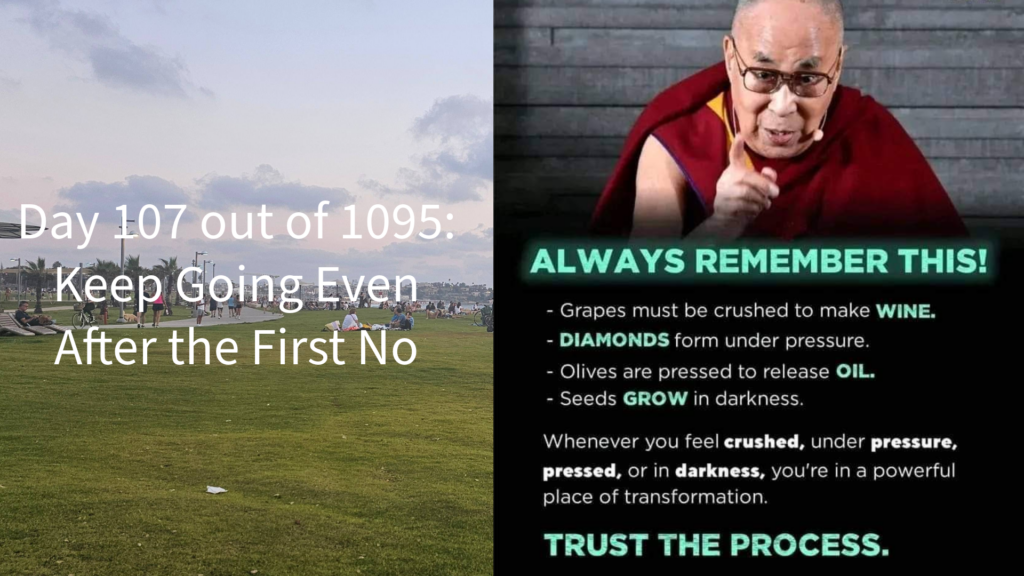
Today began in the dead of night, consumed with thoughts of the ongoing war and the relentless grind of startup life (plus a bit of everyday living in the shadow of war). One thing became glaringly clear to me—many people, investors, partners, potential clients, etc., will say "no" the first time around.
This initial rejection isn't an indication that we're not good enough or precise in what we do. It's not meant to weaken us. Instead, an entrepreneur is foremost a salesperson, who must intuitively read the room, sensitively steer through situations, and maximize outcomes.
The Power of the First No
Have you been told "no"? Ask why. Or better yet, ask what would make them say "yes." Sometimes, you'll uncover a treasure trove of insights—the initial resistance might stem from a misunderstanding. Of course, do this with all the intelligence and tact you possess, but know that hearing "no" is part of the process and the journey. Every "no" brings you closer to a "yes," if you know how to capitalize on it.
Key Takeaways:
- Understand that a "no" doesn’t mean you're not good enough.
- It’s an opportunity to refine your pitch and strategy.
- Don’t just accept the rejection; dig deeper.
- Ask why or what could have turned the "no" into a "yes."
- Each rejection is a learning opportunity.
- Use the feedback to improve and hone your approach.
Navigating Rejections with Tact and Intelligence
Rejection often feels like a dead-end, but it's more of a detour. Entrepreneurs who succeed are those who see the "no" as a stepping stone, a chance to pivot and realign. This mentality is especially crucial in the high-stakes world of startups where every decision can make or break your venture.
Remember, every interaction is an opportunity to learn. Approach each rejection not with despair but with curiosity. What can you learn from this? How can you improve?
Personal Anecdote
Just the other day, I pitched an idea to an investor who promptly said "no." Instead of walking away dejected, I asked, "What would have made you say yes?" His feedback was invaluable—it turns out he misunderstood a key aspect of our solution. Armed with this insight, I refined my pitch and secured a "yes" from another investor shortly after.
Lessons from the Trenches:
- Your persistence in seeking answers can turn rejections into opportunities.
- Use feedback constructively to adapt and improve your approach.
Join the Journey
I hope these insights help you on your entrepreneurial journey. Remember, every "no" is just one step closer to a "yes" if you leverage it correctly. Stay persistent, stay curious, and never be afraid to ask the tough questions.