

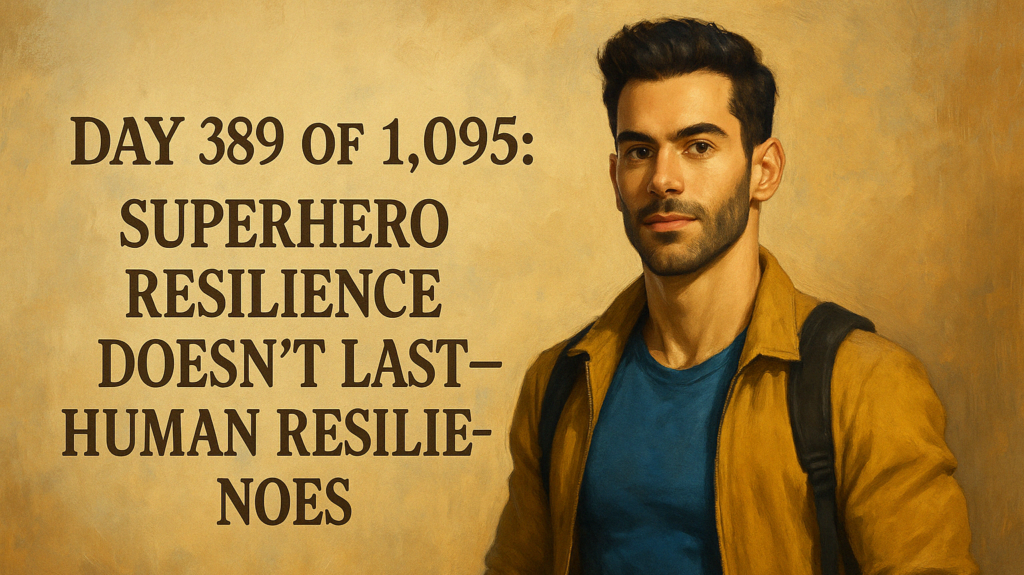
Three hundred and eighty-nine days into building a startup from zero, I’ve learned something the hard way: Being a founder doesn’t mean being a superhero. It means learning to be human—again and again.
Burnout doesn’t knock on the door. It crashes right through. It shows up as physical fatigue, mental fog, emotional reactivity. We don’t always notice it until we can’t breathe.
At first, I thought resilience meant pushing harder. Grinding longer. Taking pride in surviving on fumes.
But real resilience—human resilience—is something else entirely.
It’s recognizing when your system is screaming: pause. It’s looking at fear, grief, and stress head-on and not flinching. It’s using the tools inside you—mindfulness, reflection, gratitude—not to escape the pain, but to meet it with strength.
It’s not about being unbreakable. It’s about becoming someone who breaks—and rebuilds—well.
As a founder, I want to build products that reflect this same mindset. Products that see the human, not the perfect. That recognize the cracks, the glitches, the trauma, the temporary waves of overwhelm—and still believe: this is someone worth supporting.
The challenge? Teaching our tech to distinguish between burnout and growth. Between vulnerability and weakness. Between broken and becoming.
We’re not building features. We’re building tools for human resilience. And yes, it’s hard. But it’s also the mission.
To every founder, operator, and builder out there: Your strength isn't in how much you endure. It’s in how well you recover.
Let’s make sure the products we’re building remember that, too.