
This week felt like running a marathon on a roller coaster. There’s so much movement — new conversations, new directions, and that constant hum of “what’s next.”
We’re waiting for decisions on design partnerships with U.S. defense and emergency networks. We’re progressing in talks to join a health-tech innovation network. Meeting first investors who showed interest and preparing the ground for our initial raise. And at the same time, designing with our partners to refine the experience for those who protect us — and their families.
While all of that happens, we’re also preparing for our design workshops in November, building the foundation of our brand, our story, and a podcast with Meta and the 150K reservist families community.
It’s a lot. But it’s the good kind of a lot — the one that reminds you why you started.
When Trauma Echoes Beyond the Battlefield
In the middle of all the progress, one topic kept surfacing this week as we worked on our investor materials — trauma. Not as a clinical term, but as something deeply human.
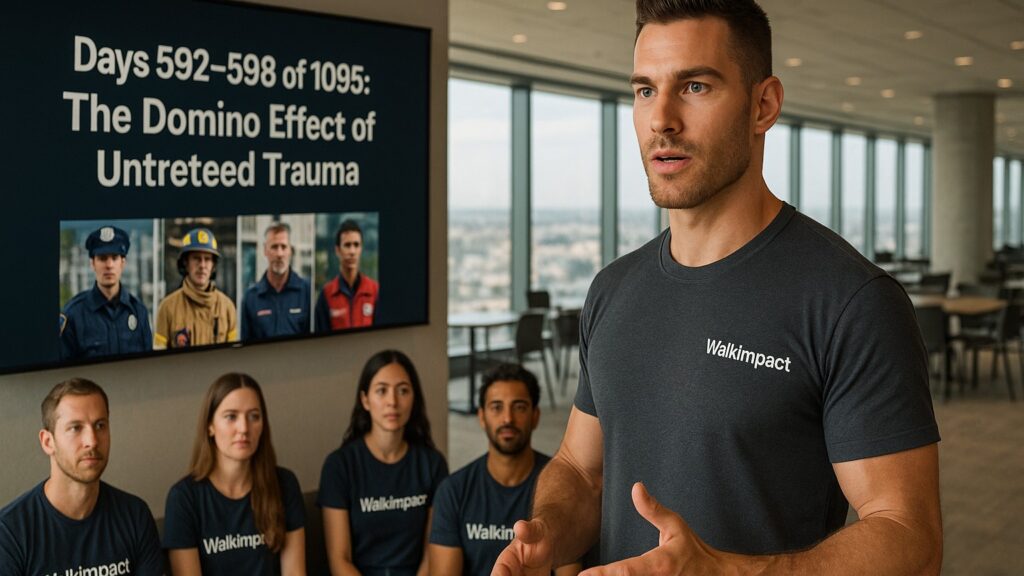
A single soldier returns home changed. His partner senses it. The children react to it. Within weeks, the invisible ripple begins.
Research shows that one soldier’s trauma affects 4–5 family members directly. 15%+ of those families experience relationship strain. Children often develop behavioral challenges within months. Employers lose, on average, 33 workdays per year per affected employee. The economic cost? $74 billion annually in caregiver impact alone.
One person’s pain silently scales into a societal burden.
The Larger Picture
It’s not just a military issue. It’s a human system issue.
- 1 in 3 first responders will face behavioral health challenges in their careers.
- 15–30% of combat veterans experience PTSD.
- Over half of adults with mental health issues receive no treatment.
- Over a million people talk to AI about suicide each week.
Systems often react only when a crisis explodes. Families collapse first. And that’s exactly where prevention should begin.
Why We’re Here
Our mission is simple — to build scalable systems of care for those who protect us, and the people who love them.
Through our Kochot & Families initiative, we’re designing experiences and technology that strengthen resilience before trauma becomes tragedy.
We believe that well-being is not a luxury — it’s infrastructure.
10 Small Shifts for Building Resilience
- Name the weight. When you name the pressure, it loses power.
- Pause intentionally. Thirty seconds of breathing can reset your nervous system.
- Acknowledge your invisible load. You don’t have to carry it alone.
- Talk early. Prevention begins with one honest conversation.
- Protect your recovery time. Rest is not weakness.
- Build micro-communities. Resilience grows in circles, not in isolation.
- Use data to deepen empathy. Behind every number is a human story.
- Drop perfection. It’s just control wearing a nice suit.
- Celebrate the small wins. They rewire the brain for hope.
- Lead with care. Leadership without empathy burns twice — you, and them.
If one person’s trauma can ripple through an entire system, imagine how far one act of care can ripple back.
That’s the domino effect we’re choosing to create.