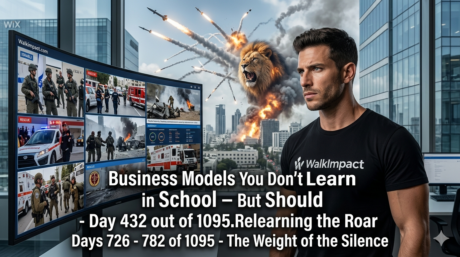

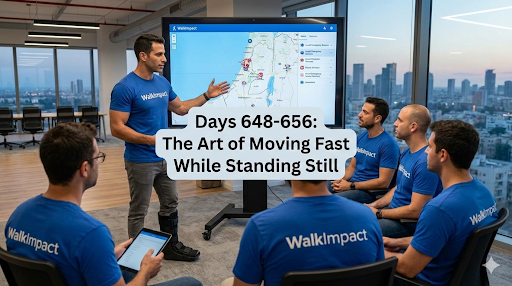
The world doesn't stop when you do. But sometimes, it forces you to change the way you move through it.
Last week, a physical injury turned my usual sprint into a slow, deliberate walk. When your body demands a different tempo, your perspective shifts. The streetlights look different when you aren't rushing past them. The silence between meetings becomes louder. For a founder, "slow" usually feels like "failing," but these past few days taught me it is actually where the most vital listening happens.
We are standing at the edge of something massive – launching our platform for the families of our security and rescue forces. These are the people who hold the front lines together from home, dealing with the weight of trauma and uncertainty every single day.
While my movements became restricted, our progress didn't. By leaning into the strength of my team and our design partners, the vision didn't just stay alive – it sharpened. We are officially opening our Beta testing phase, and the pulse of this mission has never felt stronger.
In the startup world, we talk about "pivoting" our products, but we rarely talk about pivoting our energy. When I couldn't rely on my physical speed, I had to rely on my sensory awareness. I had to listen to the nuance in a team member’s voice and the specific needs of the families we serve.
Efficiency isn't about doing more; it is about doing what matters with total presence.
10 Tips for Navigating High-Stakes Transitions:
- Audit your energy, not just your time. Notice where you feel "heavy" and where you feel "light" – focus on the light.
- Listen to the "Space Between." In meetings, pay attention to what isn't being said. The most important feedback often lives in the pauses.
- Let the team lead. Trusting your team isn't just a management style; it’s a necessity for scaling.
- Use the "Sensory Check." When overwhelmed, identify one thing you see, one you hear, and one you feel to ground yourself.
- Prioritize the "Critical Few." Identify the 20% of tasks that will drive 80% of the impact for your users.
- Embrace the "Slow-Motion" Advantage. Moving slowly allows you to spot errors that high speed masks.
- Communicate the "Why" repeatedly. Facts inform people, but the "Why" connects them.
- Build for the person, not the user. Remember the human faces of the families waiting for your solution.
- Accept the restriction. Don't fight the injury or the setback – work within it. Resistance wastes energy.
- Celebrate the "Quiet Wins." A successful sync or a refined feature is just as important as a signed contract.
The path to helping families navigate trauma starts with how we navigate our own challenges. We are ready for the Beta. We are ready to liste