

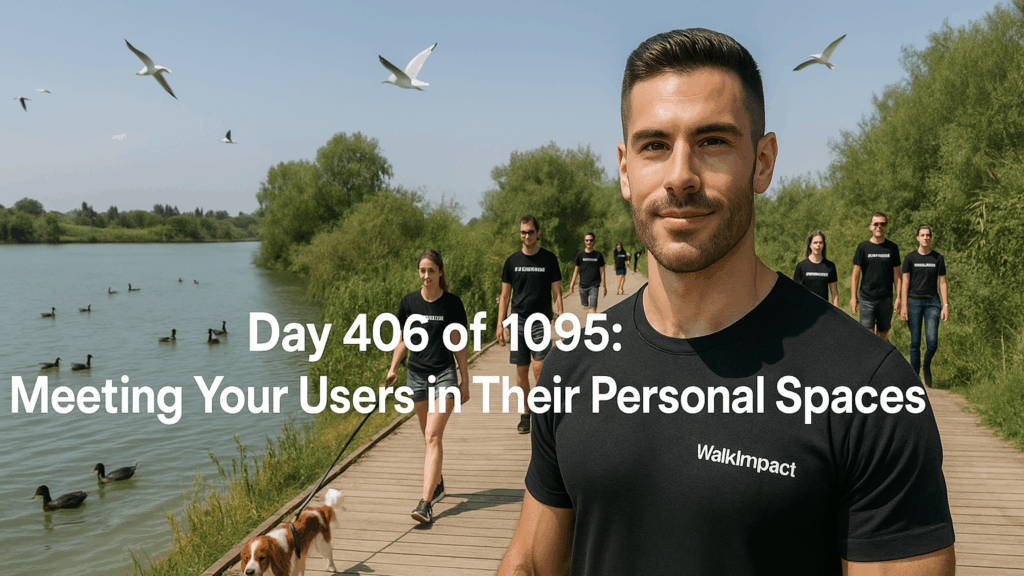
Last day, I had a rare opportunity.
I watched Israel’s emergency, security, and rescue personnel spending time not in uniform—but with their families, out in nature. No stress. No commands. Just people.
And it struck me: Sometimes the best way to observe and understand your users isn’t through formal interviews or surveys. It’s by watching how they behave when no one is watching.
In tech, we tend to look for patterns in data dashboards or through meticulously crafted questionnaires. But if we want users to feel truly seen and understood, we need to meet them in their personal spaces—both physical and digital.
So how do we do this at scale? How can AI and technology help us create products that make users feel "this was built just for me"?
Here are 10 approaches I’ve identified to get closer to users where they really live:
1. Naturalistic Observation
Be present where your users naturally gather—events, communities, hobbies. Listen without leading.
2. Social Listening
Track open conversations across social platforms and niche forums. Let users tell you what matters most to them.
3. Heatmaps & Anonymous Behavioral Data
Analyze where users click, scroll, and pause on your digital assets. Silent signals reveal true interests.
4. In-Depth Qualitative Interviews
Skip the scripted questions. Open, human conversations yield insights no survey can uncover.
5. IoT & Smart Device Integration
Use connected devices to learn about real-world habits and usage patterns—at home, in vehicles, or at work.
6. AI-Powered Behavior Clustering
Let machine learning find patterns and groupings beyond traditional demographics.
7. Micro-Surveys in Context
Ask short, relevant questions at the moment of user engagement. Don’t disrupt—enhance.
8. Collaborate with Niche Communities
Partner with community managers and creators to access and understand micro-audiences.
9. Gamified Research
Turn preference discovery into a game. People reveal more when they're playing, not reporting.
10. AI Sentiment Analysis at Every Touchpoint
Analyze emotions across emails, chats, social posts, and voice interactions to capture deeper user sentiment.
We’re not collecting data for the sake of data. We’re creating experiences where users feel, “This was designed with me in mind.”
Where have you learned the most surprising things about your users—inside the data or out in the real world?