

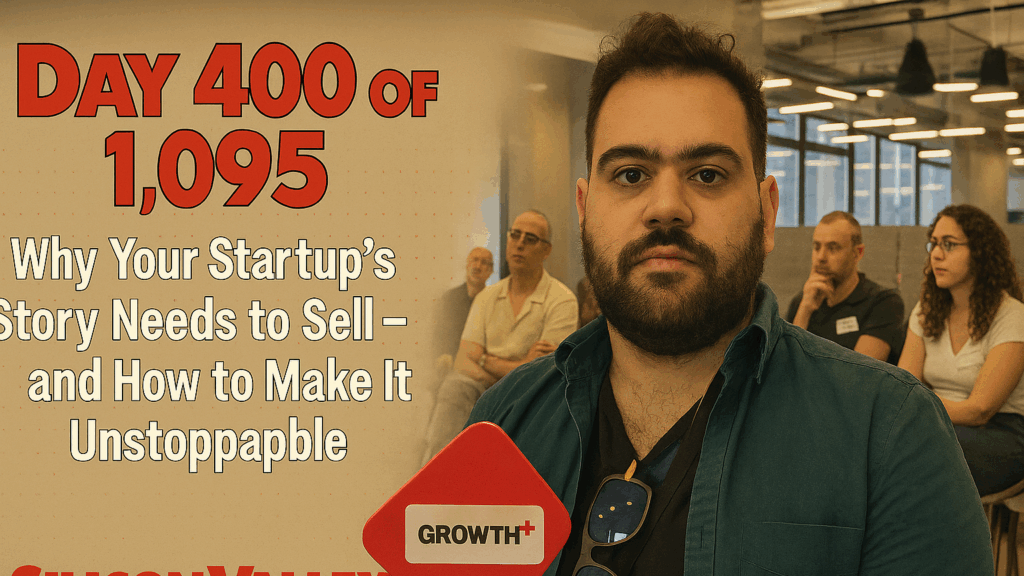
Day 400 of 1,095: Why Your Startup’s Story Needs to Sell – and How to Make It Unstoppable
As entrepreneurs, we train constantly – product, market fit, sales, leadership. But one muscle often gets neglected: our story.
This week, I got powerful feedback. My story? It’s good. But it can be much better.
Here’s the thing – telling your story isn’t a one-time exercise. It’s ongoing, evolving, and context-driven. There’s a version for every moment:
- The 5-minute pitch.
- The 3-minute investor intro.
- The 1-minute coffee chat.
- And yes, the elevator pitch – sharp, focused, and unforgettable.
Why is storytelling so essential in startups?
Because humans don’t invest in products – they invest in people, in purpose, in vision. Data convinces, but stories convert.
Let me share how I break down a startup story – and how you can use it to craft your own narrative that not only resonates, but sells.
1. Start With the Pain – and Own It.
Every great story starts with a problem that matters. And don’t sugarcoat it – make it hurt.
Example: "In Israel, 50,000 soldiers are expected to suffer from PTSD by 2030. The mental health system? Overloaded. Waiting time for therapy? Up to a year. People break while they wait."
Your audience should feel the weight. Investors invest in big problems.
2. Present the Dream – The “What If”.
What if this didn’t have to be the reality? What if the problem could be solved at scale?
Let them see the future you're building. Invite them into it.
3. Deliver the Solution – Simple, Specific, Scalable.
Simple: We don’t need jargon, we need clarity. Specific: What does your product actually do? Scalable: How does this grow? Why now?
At WalkImpact, we created LaVie AI – a personal mental resilience companion. It combines movement, mindfulness, and positive psychology – personalized, daily, via WhatsApp. No app. No friction. It’s backed by research from Harvard, Stanford, and the American Psychological Association. It’s real.
4. Prove It – With Data and Credibility.
- Market size.
- Scientific backing.
- Pilot success.
- Team expertise.
Facts build trust. Your story should feel like a narrative, but read like a strategy.
5. Call to Action – Bold, Clear, Now.
Stories without direction? Just entertainment. Great stories invite action. Invest. Join. Share.
Why This Structure Works – The Psychology Behind It:
- Cognitive Biases: The identifiable victim effect – when we hear real, specific problems, we care more.
- The Brain Loves Stories: Stories activate more areas of the brain than facts alone – people remember them better.
- Emotional Investment Leads to Financial Investment.
The Takeaway for Founders:
You are your startup’s best storyteller. Not just the CEO – the Chief Storytelling Officer.
Craft your narrative like your success depends on it – because it does.
Want to take your story to the next level?
- Start with pain.
- Show the dream.
- Deliver the solution.
- Back it with data.
- End with action.
And remember – it’s not about selling your product. It’s about selling belief.
P.S.
I’m sharing this because I’m still sharpening my own story. Every pitch, every meeting, every conversation – is training. How are you telling yours?